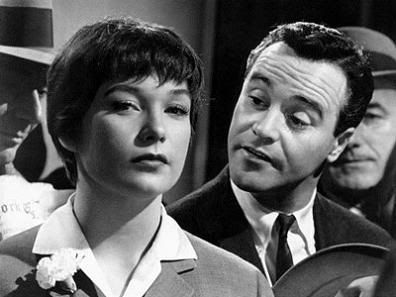
Years ago, the AV Club did a piece riffing on Nathan Rabin's phrase "Manic Pixie Dream Girl" (used "to describe that bubbly, shallow cinematic creature that 'exists solely in the fevered imaginations of sensitive writer-directors to teach broodingly soulful young men to embrace life and its infinite mysteries and adventures'...the Manic Pixie Dream Girl archetype is largely defined by secondary status and lack of an inner life. She's on hand to lift a gloomy male protagonist out of the doldrums, not to pursue her own happiness.")
The article then went on to list sixteen movies that meet the MPD Girl standard; aside from the fact that any self-respecting woman over fourteen knows that only a Manic Pixie Dream Girl would use a phrase like "Manic Pixie Dream Girl" to describe herself, it's an interesting take on the often less-than-crucial roles women play in too many movies. There are a few misfits included on the list (arguably Annie Hall and Breakfast at Tiffany's) but for me, the most clear cut mistake is including "The Apartment".

The AV Club description of the movie reads as if ripped from the pages of A Movie Guide for Hipsters: "All Jack Lemmon wants to do is ascend the corporate ladder, even if that means loaning his bosses his terrific bachelor pad for their illicit trysts. Then one day he comes home to find that the peppy elevator operator he likes is lying comatose on his sofa, feeling suicidal after an affair gone wrong. He nurses her back to health and she turns his life upside down, talking a blue streak until she convinces him to adjust his values."
Aside from MacLaine not fitting the template -- her character is not secondary in status and compared to Lemmon at least, has few adorable quirks; she also possesses an inner life in which Lemmon figures little until the third act -- what's interesting about "The Apartment" is that Lemmon's character is not typical of an early 60's male hero. Wilder throws in just enough gender bending to keep everything just a little off center sexually; the chaste male character in pursuit of a woman having an affair with a married man
There's more than a touch of The Sixties Single Girl to C.C. Baxter (eating tv dinners alone in front of the tube & buying hats to celebrate a success) and if anything, he occupies the position of a dream guy himself -- a male character entering a troubled heroine's life and turning it all around, uplifting her via his inherent decency and open-hearted self, a guy with charming quirks (draining spaghetti on a tennis racket) and bedrock values (saving the heroine from suicide, hiding her office affair) with not a bitter bone in his body (still wishing her the best when it looks like she's marrying the boss Lemmon now hates)and just sexy enough in a clean-cut-but-still-charming way.
All of which could feel hokey and trite fifty years on, but since Wilder is a great filmmaker with a great cast & great
script in hand, it still sings. He never ignores their broken bits -- the unbridled ambition to get ahead, marital infidelity,
a suicide attempt -- or plays off that sadness as just-fer-laugh moments: even the woman Baxter picks up in the bar, longing for
her locked-up jockey in Cuba, has a bit of dignity wrapped up in her big-bosomed blonde routine. These are two deeply flawed
people -- corrupt in how they're going about getting what they want yet still decent at their core -- and Wilder makes them
loveable (that most tired of words) by passing no judgment on them. He walks them to their happy ending without insulting them,
or the audience; guess that's what a Magic Pixie Dream Director can do.