Wednesday, June 26, 2013

pretty is as pretty does

Pretty is eye-catching, pretty is charming; perfect teeth and full lips and slim hips and wide open eyes (or whatever your short list of pretty is, was, or will be) but beautiful is better. Beautiful is where the cracks are, where the light gets in (as Montreal homeboy Leonard Cohen says) and -- unlike pretty -- there’s no shelf life to beauty; it has no expiration date.

And that’s Audrey Hepburn: no expiration date.

As pretty as she is in the opening sequence of "Breakfast At Tiffany’s" (all delicate bones, hair piled high, wearing the most famous little black dress of all time, donut and coffee in elegantly gloved hands – and fully owning the real estate in front of Tiffany’s on a pristine, Manhattan morning in 1960, just by standing there) as perfect as all that is (and it wasn’t; Blake Edwards bitched at her for not getting the coffee sequence right, rattling her, unsettling her) as pretty as she is in every moment of that shot -- that scene, that movie, her whole career -- her beauty shines later in life. It shines when youth is gone and something more settles into every inch of her.

She starved as a child during WW2 & worked for the Dutch resistance, ferrying messages back and forth (stuck in a basement once for days, as a girl of ten) and never forgot the hunger and fear of those panicked, terrifying times: she spent the last years of her life working for endangered children everywhere. And when – almost fifteen years after her death -- Christie's auctioned off the original dress she wore in Breakfast for $807, 000 (one of the highest prices ever paid for a piece of movie memorabilia), the money went -- as if Audrey herself had somehow planned it, somehow reached from beyond the grave, with one perfectly gloved hand, to seal the deal -- all the money went to support the construction of a school for poor children in Calcutta.


And that's just not something pretty alone can do.

unforgettable

Impossible to describe accurately, disjointed and strange and compelling, and likely to itch at the brain for decades (how could I have missed this? Where the hell was I when this went down?) Ah, Karen: you're an under-appreciated actress, wonderful and detailed and expressive in "Five Easy Pieces", "Day of the Locust", "Nashville" and (of course!) "Trilogy of Terror" (the moment you become the fetish doll is a perfect little creepfest) but this...this Weimar Republic meets the Raquel Welch Wig Line? Unforgettable.

Tuesday, June 25, 2013

manic pixie dream girl

Years ago, the AV Club did a piece riffing on Nathan Rabin's phrase "Manic Pixie Dream Girl" (used "to describe that bubbly, shallow cinematic creature that 'exists solely in the fevered imaginations of sensitive writer-directors to teach broodingly soulful young men to embrace life and its infinite mysteries and adventures'...the Manic Pixie Dream Girl archetype is largely defined by secondary status and lack of an inner life. She's on hand to lift a gloomy male protagonist out of the doldrums, not to pursue her own happiness.")

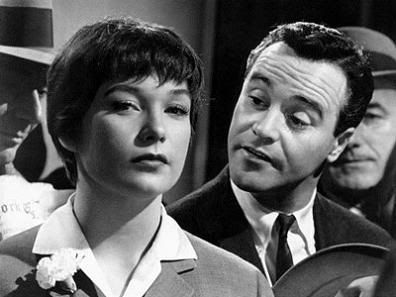
The article then went on to list sixteen movies that meet the MPD Girl standard; aside from the fact that any self-respecting woman over fourteen knows that only a Manic Pixie Dream Girl would use a phrase like "Manic Pixie Dream Girl" to describe herself, it's an interesting take on the often less-than-crucial roles women play in too many movies. There are a few misfits included on the list (arguably Annie Hall and Breakfast at Tiffany's) but for me, the most clear cut mistake is including "The Apartment".


The AV Club description of the movie reads as if ripped from the pages of A Movie Guide for Hipsters: "All Jack Lemmon wants to do is ascend the corporate ladder, even if that means loaning his bosses his terrific bachelor pad for their illicit trysts. Then one day he comes home to find that the peppy elevator operator he likes is lying comatose on his sofa, feeling suicidal after an affair gone wrong. He nurses her back to health and she turns his life upside down, talking a blue streak until she convinces him to adjust his values."

Aside from MacLaine not fitting the template -- her character is not secondary in status and compared to Lemmon at least, has few adorable quirks; she also possesses an inner life in which Lemmon figures little until the third act -- what's interesting about "The Apartment" is that Lemmon's character is not typical of an early 60's male hero. Wilder throws in just enough gender bending to keep everything just a little off center sexually; the chaste male character in pursuit of a woman having an affair with a married man

There's more than a touch of The Sixties Single Girl to C.C. Baxter (eating tv dinners alone in front of the tube & buying hats to celebrate a success) and if anything, he occupies the position of a dream guy himself -- a male character entering a troubled heroine's life and turning it all around, uplifting her via his inherent decency and open-hearted self, a guy with charming quirks (draining spaghetti on a tennis racket) and bedrock values (saving the heroine from suicide, hiding her office affair) with not a bitter bone in his body (still wishing her the best when it looks like she's marrying the boss Lemmon now hates)and just sexy enough in a clean-cut-but-still-charming way.

All of which could feel hokey and trite fifty years on, but since Wilder is a great filmmaker with a great cast & great script in hand, it still sings. He never ignores their broken bits -- the unbridled ambition to get ahead, marital infidelity, a suicide attempt -- or plays off that sadness as just-fer-laugh moments: even the woman Baxter picks up in the bar, longing for her locked-up jockey in Cuba, has a bit of dignity wrapped up in her big-bosomed blonde routine. These are two deeply flawed people -- corrupt in how they're going about getting what they want yet still decent at their core -- and Wilder makes them loveable (that most tired of words) by passing no judgment on them. He walks them to their happy ending without insulting them, or the audience; guess that's what a Magic Pixie Dream Director can do.

Thursday, May 23, 2013

bien dans sa peau

From Dressaday.com:
"Prettiness is not a rent you pay for occupying a space marked 'female'."

tubory

Tubory = a television memory which no one else remembers or cares about (leading you to wonder if it ever really existed) followed by finally finding a television clip of the same on You Tube (the link then triumphantly shared with everyone who still doesn't remember or give a damn).

Which brings us to Paulus the Wood Gnome & these haunting words:

She's out to get you,
Shes out to get you,
She's out to get you
Beware!


Paulus was one of my worst tubories. When I finally tracked it down, the relief was out of all proportion to the event (it's a brain worm, working away in the back of your mind..."She's out to get you, she's out to get you--argghghgh, what was that goddamn show called?")

After seeing it again, over thirty-five years later, I realize now what a little creepfest this show was: Paulus looks like he belongs on "To Catch A Predator", the animal puppets resemble fetish dolls made out of human skin and the witch is, well, a real witch. (All these years later, I have moved from fear to sympathy: she's not the patriarchal ideal of beautiful, so shit, yes, attitude will be had --between that, the blue skin and the ricket-like disease apparently overtaking her ankles--she has no choice but to turn to potions and spells for some sense of self. She's clearly just trying to survive in a gnome-puppet world--and maybe, just maybe, she knew Paulus was a child predator all along. And no one would listen.)

The other thing that struck me is how often the "ugly witch" shows up clad in non-white skin. The pretty witches are usually white, the rest are blue or yellow or orange or green. Misogyny and racism, in one handy little (supposedly child-friendly) package, with the same nasty message about women and power, whatever their skin color: she's out to get you, beware.


Sunday, May 27, 2012

the snack


The pool is still and perfect and blue-green, the breeze soft, easy, lazy afternoonish. The dogs (rescued mutts, smart but not always pretty) run back and forth to the deep end of the pool, drawn to the water but still nervous at the sound of the lap-lap-lap against the tile. Every now and then you feel their rough tongues on the back of your knee--working away like deer at a salt lick--and you reach out a hand to push them away and then grab the ice cold glass on the side of the pool, full of lemon slices and lots of big ice cubes (small ones melt too fast).

And if it's the eighties and you have a big sister with a big pool and a big house (and an even bigger heart) then it's snack time. And that means different things on different days: sometimes salami, baguette slices and chunks of parmesan, sometimes croissants, paper thin ham, swiss and gherkins, sometimes nothing more complicated than each of you having your own bag of salt & vinegar chips, and a communal bowl of Lipton's onion dip. And sometimes it's your favorite--cheesy & melty with black olives & curry--and so good even the dogs sit quietly, sniffing the air and respectfully waiting for something, anything, to be thrown their way. But whatever it is, it's always the snack you craved at that exact moment, without knowing it was wanted until it turned up on a plate.

Eventually, the scene poolside is going to get very, very strange (like a Val Lewton horror movie from the 40's, all weird angles, bizarre dialogue, ghost sightings and people revealing themselves to be not who you thought they were) and to stay sane, you will make inside jokes about teddy bears floating face down in the perfect pool, and you and your sister will laugh until the Diet Coke foams out your noses (even as your eyes start to tear up) and the longer you have to live with using jokes to keep the crazy at bay, the smaller and smaller the big house will feel. Eventually it will go on the market (bought by a couple as strange as the house) and you and your sister will walk by on your visits home, the pool glimpsed through the fence--forever perfect and still and blue-green--wondering what really happened back then.

But today, it's before all that: everything is hushed, breezy-soft and the dogs are waiting patiently for their turn. Your hand reaches past the beaded, icy glass to grab the plate--the small plate by the big pool in the big house--for the snack.


Curry Cheese Melts

Ingredients

1 cup black olives (not oil cured) pitted & chopped
1/3 cup green onions, chopped
1 1/2 cups shredded sharp-ish Cheddar cheese
1/2 - 1 teaspoon curry powder (or more to taste)
1/2 cup mayonnaise
1/2 teaspoon salt
8 English muffins, split in half
Optional: dash of heat in the form of red pepper flakes, or Sriachi chili sauce, or sambal olek ("or" being the operative word here).

Directions

1) Preheat oven to 400 degrees.
2) Combine olives, green onions, cheese, curry powder, mayo and
salt in a bowl; mix well.
3) Spread mixture on English muffins. Cut muffins into fourths,
place on cookie sheet.
4) Bake at 400 degrees

Wednesday, November 4, 2009

notes


Every now and then, you get stuck on a great song and listen to it over and over until it no longer catches your ear -- and sometimes you get stuck on a bad song, and listen to it until your ears all but bleed.

In the early fall of '89 I listened to "Cherish" by Madonna repeatedly, and then one day it was over, done with, and whenever I hear it now I cringe, wondering what drove me to listen again and again. I hate the lyrics and tune, the faux-fifties pop feel and Madonna's thoughtless, chirping vocals...but still, I remember bouncing down the streets of Manhattan, newly arrived in New York City, high heels clicking along, a walking happy face--"Romeo and Juliet, they never felt this way I bet!"--and I have to admit that this ridiculous song owned me, if only for a few weeks. (Which is the curse of Madonna, a woman responsible for 99.9 percent of the tunes on anybody's list of "Bullshit Songs I Have Regrettably Loved".)

Between the bad songs you hate admitting you once loved and the great songs you run into the ground, there's the song you listen to over and over again, in permanent, regular rotation. A song or piece of music you never get sick of, ever, with no rhyme nor reason to the liking. I've got several on that list, but recently I've been playing "Despertar" by Aisha Duo, and I'm pretty sure it'll end up in the same category. Sample here:

http://www.cduniverse.com/search/xx/music/pid/6847777/a/Quiet+Songs.htm

It's a beautiful piece of music -- mysterious and elegant -- just right for a summer night; like a moonlit waltz for stylish spies escaped from a Hitchcock flick. And it comes with the added benefit of knowing that no matter whether it becomes the song I forever play -- or the song I forever played into the ground -- I will never ever ever look back, wondering why I loved it so.

Monday, August 3, 2009

beauty & the b(r)east


Back in the thirties/forties, if you were in need of a beautiful woman with a working funny bone, Hollywood was an embarrassment of riches: Carole Lombard, Katharine Hepburn, Claudette Colbert, Roz Russell, Constance Bennett, Barbara Stanwyck, Ginger Rogers, Irene Dunne, Myrna Loy, Jean Arthur, Jean Harlow--each in their own way all kinds of beautiful, and all kinds of funny (from martini-repartee to outright slapstick).

That happened (in no small--and back-handed--part) because of the Hays code, a laundry list of prohibitions the industry agreed to follow, to forestall any legislation enforcing censorship:

http://www.classicmovies.org/articles/blhayscode.htm

Hays had a bitter downside: once certain acts were forbidden or minimized ("Excessive and lustful kissing, lustful embraces, suggestive postures and gestures, are not to be shown"), a kind of flashy, jazz age juiciness disappeared from the movies (Stanwyck was never again quite so brazen, so wonderfully in-yer-face cheap) but the Code came with a big upside, a golden trade-off: women got the gift of movie gab.

A cold eye on characters bordering on the salacious meant no tits and ass short-hand in any script: the moment when the female lead established her romantic value came not solely through her sexual appeal--"I'd tap that"--but through a more sly approach. Without the freedom to hook the audience via nudity or guaranteed sexual availability, the only way left to establish charisma, character and romantic inevitability was through dialogue.

So beautiful women talk smart, fast and funny (Roz Russell in “His Girl Friday”, Jean Harlow in “Dinner at Eight”, Ginger Rogers in “Stage Door”) or cool and wry and witty (Barbara Stanwyck in “The Lady Eve”, Claudette Colbert in “It Happened One Night”) or savvy and smart and sarcastic (Irene Dunne in “The Awful Truth”, Hepburn in “The Philadelphia Story”) and on and on and on: classic Hollywood is breathtaking because women in comedies talk back, talk up--and under and over and through whatever comic obstacle they face--and the talk is funny, smart, goofy, charming and dead to rights.

Romance, in that era of the movies, is all but defined by the sound of a woman talking: as much as the camera loved--adored--their faces and figures, it was always their words that sealed the deal.

Wednesday, November 19, 2008

november 18, 1978


Her name is Christine Miller: she is African American, 54, and amidst the perverse, raw insanity of the final forty-five minutes of Jonestown--recorded by Jones himself on a cassette tape--she tries, again and again, to thwart a massacre in the making.

Calmly, she engages Jim Jones (his speech thick-tongued compared to her clear declarations) in a battle for control of Jonestown. She plays his own beliefs off against him--"I feel as long as there's life, there's hope. That's my faith", she says, quoting Jones back to himself--and points out that surely the defection of only twenty members isn't worth the whole community dying.

Surrounded by guards with guns and bows and arrows, she insists that she should be given a chance to follow her own destiny, that the children should be allowed to live, that their contact in Russia be called for an emergency airlift--all rebuffed by Jones, increasingly urgent in his demand that one and all surrender to the joys of Revolutionary Suicide, a suicide the community rehearsed over and over, in fear and awe of this day.

And then the tone shifts and the crowd turns foul and ugly--shouting her down, insulting her--even as Jones praises her for being an honest agitator, for presenting two sides of an argument; as if it were a debate society, not a death wish blooming. As if Jones had never held a gun to her head and then lowered the weapon, stopped by her insistence that he could kill her, but he would first respect her. As if love had never been part of his message; as if none of it had ever happened.

And then her voice disappears from the conversation, and she is gone, silenced by a treat given to children at birthday parties, a treat laced with poisonous drugs, none of them--as Jones falsely promised--kind-in-death: convulsions and pain in a paper cup. She is gone, replaced by babies screaming and Jones hissing "Hasten, hasten, hasten with the medication!" as the music playing in the background slows down, the generator dying.No farewell, no note to those left behind who loved her, no way to touch anyone who didn't understand why she followed Jones into the jungles of Guyana, or what drove her so far from home: just gone, gone, gone.

But even as she stood in the presence of a madman she once followed--a madman who now kept his flock imprisoned within the filthy walls of a latter day concentration camp--she still claimed her right to challenge and speak as she saw fit: she is the other side of Jonestown, and her name is Christine Miller.

Wednesday, October 8, 2008

of imagination all compact


Still, what I want in my life
is to be willing
to be dazzled --
to cast aside the weight of facts

and maybe even
to float a little
above this difficult world.
I want to believe I am looking

into the white fire of a great mystery.
I want to believe that the imperfections are nothing --
that the light is everything -- that it is more than the sum
of each flawed blossom rising and fading. And I do.

~Mary Oliver, "House of Light"

Wednesday, October 1, 2008

newman's own


Always the king of lo-fi cool, Paul Newman also had a million and one dazzling moments playing the aching, slow ride to nowheresville--many of which turn up in "The Verdict"--and script aside (the Rampling character is a stick figure, drawn with a nasty crayon) it's Newman at the height of his acting power. There's nothing showy or false creeping into the frame--no reluctance to be as physically drained, as emotionally craven and damaged as necessary--it's a heartbreaking performance, just heartbreaking. The still considerable beauty of his face at odds with the booze, the humiliation, the long dormant, now-woken hunger to matter, to heal, to win. He (and director Lumet) took a workaday plot and turned it into something substantial, something that lingers.

Newman was also a powerhouse at acting with: there are many great couplings in his film career (including Redford, of course) but one of Newman's best can be found in "Cat On a Hot Tin Roof". Playing yet another alcoholic, opposite Elizabeth Taylor as Maggie the Cat--and contrary-wise to Maggie's most famous line, "Sometimes I feel like a cat on a hot tin roof"--Newman builds a performance that is ripe with feline grace and cool disdain; even his rage at life and love and Big Daddy seeming to come with an arched back and low, rolling hiss. All of which might have destroyed the balance if not for Taylor's equal smarts as a movie star--she turns up as a wolf in cat's clothing, circling him until victorious--and whether by accident or design or some mix therein, it's breathtaking to watch.


But whatever the script or co-star, through it all, one thing is constant with Paul Newman: one of Hollywood's most beautiful men always chose the work--the part, the play, the guts of it all--instead of sliding by on a blue-eyed wink and a smile. As one of his shrewd, savvy characters might have said: he's gone, baby, gone--and we're the worse for it.

Tuesday, September 30, 2008

tubory

For years, I thought he was Terry of France: the name mangled by memory, the music perfectly recalled, but--like all true loves!--I never forgot the essence of my first tv re-run boyfriend. A dark, handsome hero with a slingshot in hand, living some kind of Robin Hoody existence (a not particularly comely lass by his side) and a pack of dirty-faced villager types suddenly swarming out from the forest, to follow Terry--Thierry la Fronde--anywhere:


I now realize that my first tv boyfriend was a sexually ambiguous male wearing a necklace ominously presaging the coming disco era (when man-jewelry went ape-shit) and the lass was actually much comelier than I thought, despite her unfortunate hair. (About the opening crotch shot--combined with slingshot wrist action--least said, soonest mended!)

Saturday, September 13, 2008

radio silence

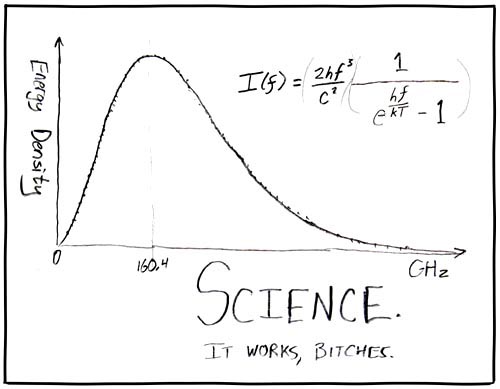
If the anti-science conservatives win the battle for hearts and minds--a battle happening right now in America--by the year 2055 there will be a top rated radio show named "What Is Your Opinion About This Fact?", with people calling in ("Hello Fayetteville, Arkansas, you're on the line!") and saying: "I don't much agree about this gravity thing" or "Who says water is always wet? Who says?"

I will be dead or addled by 2055, but for the record (a silly scientific concept) all the faith-based belief being pushed by conservative he-men and preachers and creationist teachers--the elevation of opinion over fact, of religious fervency over science--is at core touchy-feely, twinkly and hippie-dippy. They have become the cultural thing they used to mock--the "If it feels good, man, just go with it" mantra now applied to dinosaurs and global warming, instead of sex, drugs and rock 'n roll--sharing a bed (however unknowingly) with those they once despised.

Like Oprah and "The Secret", tarot card readers and UFO abductees, they know that what they Believe Is True. Which would be fine and dandy and their own business, if only it were enough for them--but it never is, for any true believer.


They are also demanding that the culture completely rework itself--from schools to government studies, everything bending and twisting to suit their anti-science conviction--in the process robbing the rest of us of something precious: knowing the difference between truth, and belief.

Monday, August 18, 2008

how 'bout them man-apples?


Gossip from Jossip: "Carolyn Hinsey, editor of Soap Opera Weekly and Soap Opera Digest, was just fired, we're told. Hinsey is described to us as a "truly malicious, horrible human being." If true, then more of you must have stories!"

The thread at Jossip has now swollen to almost 2,000 responses, turning into a soap opera itself in the process. All of Hinsey's former employees are posting tell-all tales about their former boss, along with gossip about soap actors. My favorite bit of dish is about Y&R: seems that back in the day, Melody Thomas Scott (Nikki Newman) and Eric Braeden (Victor Newman) never learned their lines, depending mostly on cue cards.

The actor playing Jack Abbott, Peter Bergman, constantly ribbed Braeden and Scott about not knowing their lines, until one day Bergman went one joke too far and Braeden put up his dukes, beating Bergman to the tune of 27 stitches on Bergman's face. The cops were initially called in, Braeden was hidden away, no charges were filed, all was smoothed over and Bergman was shot from angles hiding his injuries...but now, whenever Victor Newman turns up wearing a wife beater and boxing gloves--for one of his trademark workouts in the Genoa City gym--I'll be grinning just a little bit harder.


PISS-ANTS OF THE WORLD, DON'T FUCK WITH ME--YOU GOT THAT?

Wednesday, August 6, 2008

ancient blogverb


Forget your perfect offering,
There is a crack, a crack in everything
That's how the light gets in.


http://www.azlyrics.com/lyrics/leonardcohen/anthem.html

Sunday, August 3, 2008

myths of the right wing


That sex will always be between perfect people in a perfectly committed marriage, solely for the creation of perfect children; and therefore, no need for birth control, reproductive rights, or divorce laws.

That Big Business is always happening between perfect Big Businessmen, in a perfectly committed Big Business relationship with the Little Guy: and therefore, no need for an FDA, no need for laws protecting the right of citizens to sue corporations, no need for any law regulating the stock market.

That life is always perfectly fair, and always happens fairly to the people who work perfectly hard, in fair right-to-work states, with a perfect and fair lifetime reward awaiting those who perfectly follow the fair rules: and therefore, no need for Social Security, national health care, or Medicare.

There is not a single right wing politician who abides by these myths: time and again, they have revealed themselves to be serial divorcers, eager patrons of prostitutes and leather queens, enthusiastic supporters of reproductive rights via paying for abortions for their mistresses, and cheaters on their wives (often with men--no need for birth control there!--so in this single instance, one myth holds semi-true).

They never met a competitive marketplace they didn't fear, running instead into the soft, plush arms of partisan think-tanks and sucking on the public tit via government positions (jobs they claim to disdain for anyone, oddly, but themselves), enjoying unfair access to near-luxurious levels of health care, pension plans and regular cost-of-living increases to those pensions.

In fact--in truth, in reality, in actual world terms--if you're a right wing politician, sex is often messy, complicated and imperfect, Big Business is cold and cut-throat, and life is hardly ever fair (which is what life is like for everyone else) but instead of owning that, they spam the public with ideas that do not work, with myths they themselves cannot ever catch hold of, finally left with nothing but a profound, deeply sick hypocrisy upon which to build a life or lead a nation (which is what the rest of us call living in hell).

And all this they do while claiming purity and goodness and love of country: the self-proclaimed decency of their motives being the biggest myth of all.

Friday, July 18, 2008

summer pasta


Summer pasta is an old Silver Palate recipe that I first tasted in my sister's kitchen, years and years ago.

I was working my way through grad school, spending summers waitressing in a restaurant that specialized in desserts (which meant I constantly craved all things salty) and my sister began raving about this recipe--this combo of tomatoes and brie and garlic--and slowly, the mere description of the dish became the call of the siren: something to weigh against the endless ice cream sundaes and almond pastries I ran back and forth from table to table, section to section, forever in the weeds (tanned legs never moving fast enough to stay ahead of the movie crowd, cigarette break never long enough to justify two smokes, the end of my shift never winding down before one A.M.)

One rare night off, towards the end of July, I dropped by my sister's after she had (as she put it) made a boatload of summer pasta, and while she and her best friend sat on the back verandah drinking red wine and smoking cigarettes, I nosed through the fridge until I found it, and then--after calling out I got it, no need to get up, please save me some wine--I shoved a lovely big bite into my mouth.

And then nearly spat it all out, the way babies--so practically, so methodically--spit out Things They Find Horrifying.

Summer pasta is best warm, but it also delivers a pleasing taste when mildly cold (or so my sister said) and I had dug in, only to find myself with a mouthful of icy, gelatinous nastiness. After I was silent for a full minute she called out, "What, you don't like?" (as if she were an old Jewish mother, not an Irish Catholic Grrl) and I considered my options: I was confused (THIS was the recipe I'd been obsessing about?) and horrified (This was the recipe my SISTER had been obsessing about?) and enraged (What is this nasty shit recipe in my MOUTH?)

"It's interesting," I said, and that word--that tone--said it all and she flew into the kitchen, shook her head at the container in my hand, removed a bowl from the fridge and said: "You're eating cold soup, you silly asshole--try this."

I did, and it was wonderful and salty and smooth--so good I wanted to lick the bowl--and now, every time I make this sauce, I think of high summer, her kitchen, the shock of jelly-like horror in my mouth, followed by the perfection of my first bite of summer pasta.

Revulsion and joy, all within less than three minutes: like being in the restaurant weeds, only to find a twenty dollar tip in your section.


Summer Pasta

Ingredients

4 large peeled, ripe tomatoes, 1/2 inch dice
1 lb Brie, rind removed, torn into small chunks
1 cup clean basil leaves, cut into strips/chiffonade
3 garlic cloves, finely minced
3/4 to 1 cup, best grade olive oil
salt & freshly ground black pepper to taste
a dash of red pepper flakes
1 box linguine /fettucine
freshly grated imported Parmesan cheese

Directions

To peel tomaotes: bring five quarts of water to boil, then drop tomatoes into boiling water for about thirty seconds. When the skins just start to split, you can go two ways: remove the tomatoes, drop them into an ice water bath and then peel five minutes later or (my version) remove, then immediately hold under cold running water as you peel.

Combine diced tomatoes, peeled Brie, olive oil and garlic in large serving bowl: let sit, covered, at room temp for at least three hours.

Bring 6 quarts water to a boil in a large pot. Add pasta and cook according to directions for al dente. Drain pasta, toss with sauce and correct seasoning with salt and freshly ground pepper. Let sit a few minutes (original recipe says serve immediately, but waiting five to seven minutes allows the sauce to develop better, IMO), then toss a few more times. Serve with freshly grated parm.

Friday, July 11, 2008

the story

one degree at a time.